top of page


Tyrannosaurus Rex (April 16, 1968) – My People Were Fair and Had Sky in Their Hair, but Now They're Content to Wear Stars on Their Brows Acetates (Single-Sided Emidisc Mono)
These are single-sided Emidisc recording blank acetates for Tyrannosaurus Rex’s debut album My People Were Fair and Had Sky in Their Hair, but Now They’re Content to Wear Stars on Their Brows. The disc shown is Side II, marked in green ink with the artist name, side designation, date “16 4 68”, “MONO”, and “33⅓ rpm”. Manufactured in Great Britain as a recording blank by E.M.I. Tape Limited, Hayes, Middlesex. RECORDING Recorded at Advision Studios, Gosfield Street, London.Prod

Tyrannosaurus Rex
Apr 15, 19683 min read


Tyrannosaurus Rex (1968) – Debora(h) / Child Star Single UK: Acetate
This rare Tyrannosaurus Rex acetate documents an early stage in the group's recording history during 1968. The surviving double-sided EMIDISC acetate contains "Debora(h)" on one side and "Child Star" on the other, preserving fascinating handwritten annotations and illustrations created by Marc Bolan and June Child. The acetate is particularly significant because it provides a personal glimpse into the creative world surrounding Tyrannosaurus Rex at the time. The handwritten
Tyrannosaurus Rex
Mar 17, 19683 min read


Tyrannosaurus Rex (1968) – Debora(h) Single UK: Acetate
This rare single-sided acetate captures an early Tyrannosaurus Rex recording of "Debora(h)", one of the group's most important early compositions. The surviving disc is particularly notable because the title appears with the spelling "Deborah", preserving one of several contemporary variations associated with the song during its development. A highly desirable collector's item from the formative Tyrannosaurus Rex period and provides an important link between the group's stud
Tyrannosaurus Rex
Mar 14, 19682 min read


Marc Bolan (August 1967) – Jasper C. Debussy Acetate UK: Single-Sided Acetate
This rare single-sided SPOT acetate preserves Jasper C. Debussy, one of twelve recordings completed by Marc Bolan and Steve Peregrin Took during two recording sessions held at Spot Studios during August 1967. These sessions represent a key turning point in Bolan's artistic development and document the earliest stages of the musical partnership that would soon become Tyrannosaurus Rex. RECORDING The recording was produced by Simon Napier Bell. Recording took place at Spot Stud
Tyrannosaurus Rex
Jul 31, 19672 min read


Marc Bolan (August 1967) – Lunacy's Back Acetate UK: Single-Sided Acetate
This rare single-sided SPOT acetate preserves Lunacy's Back, one of twelve songs recorded by Marc Bolan and Steve Peregrin Took during the August 1967 Spot Studios sessions. The acetate survives as an important document from the period immediately preceding the creation of Tyrannosaurus Rex and offers a glimpse into Bolan's rapidly developing songwriting style. RECORDING The recording was produced by Simon Napier Bell. Recording took place at Spot Studios, South Molton Street
Tyrannosaurus Rex
Jul 31, 19672 min read


Marc Bolan (August 1967) – Jasmine '49 Acetate UK: Single-Sided Acetate
This rare single-sided SPOT acetate preserves Jasmine '49, recorded during Marc Bolan and Steve Peregrin Took's August 1967 recording sessions at Spot Studios, London. The acetate forms part of a remarkable group of twelve recordings completed during two sessions that helped lay the foundations for the music that would shortly emerge under the Tyrannosaurus Rex name. RECORDING The recording was produced by Simon Napier Bell. Recording took place at Spot Studios, South Molton
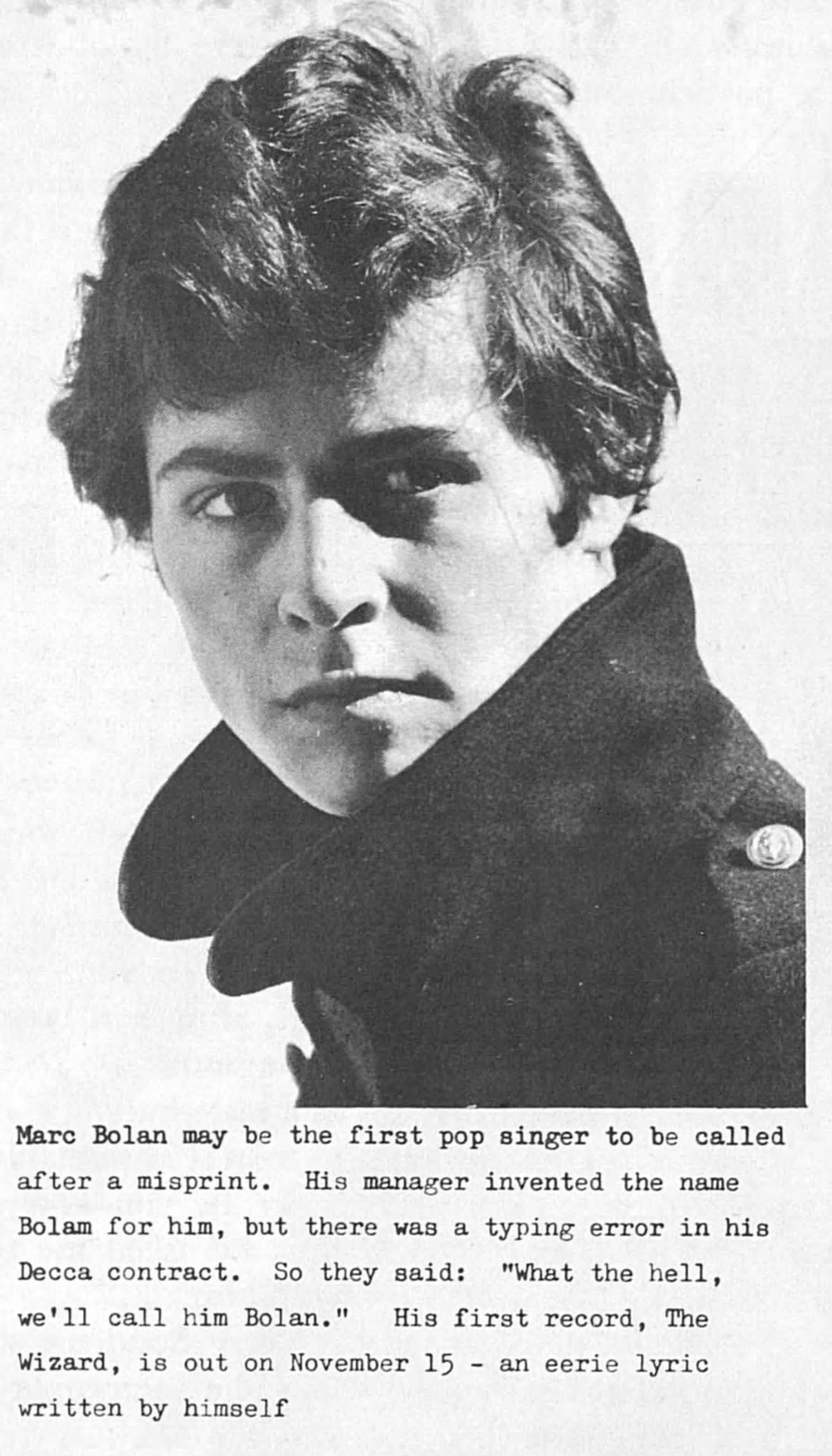
Marc Bolan
Jul 31, 19672 min read


Marc Bolan With John's Children (1967) – Hippy Gumbo / Desdemona Acetate UK: 8"
This rare 8-inch double-sided acetate documents the brief but significant period when Marc Bolan was working with John's Children following his departure from the group as an official member. The acetate couples Hippy Gumbo with Desdemona, two recordings closely associated with Bolan's creative partnership with the band during 1967. Surviving examples are particularly important because they preserve recordings from a period that bridged Bolan's work with John's Children and h
Marc Bolan
Jan 1, 19673 min read
bottom of page