


Tyrannosaurus Rex (April 27, 1968) “Debora” Single Review - Melody Maker

Updated: Jun 16
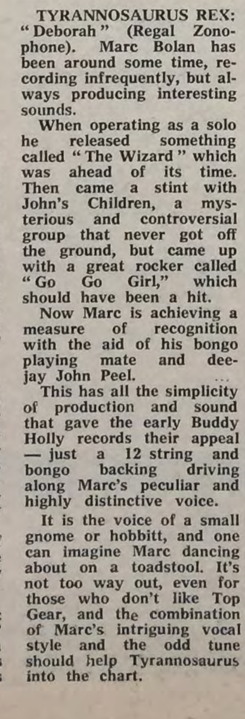
The April 27, 1968 edition of Melody Maker reviews Tyrannosaurus Rex’s debut single “Debora” (Regal Zonophone), praising Marc Bolan’s distinctive voice and the track’s simple yet effective production.
Publication: Melody Maker
Date: April 27, 1968
Country: United Kingdom Location: London
Section: Singles Review
THE STORY
The review traces Bolan’s career from his solo single “The Wizard,” through John’s Children, to the current duo with Steve Took. It highlights the bongo-driven sound, Bolan’s “peculiar and highly distinctive voice,” and the song’s potential to chart despite its unconventional style.
CONTEXT AND NOTES
This Melody Maker review appears in the same week as several other regional profiles of the band, reflecting the growing buzz around Tyrannosaurus Rex following the release of their debut single “Debora” / “Child Star.” It captures the band at the very start of their recorded career.
FEATURE HIGHLIGHTS
Event: Debut single review
Era: 1968 (Early Tyrannosaurus Rex / Psychedelic Folk)
Tone: Positive, intrigued, forward-looking
Photography: Text-based review (no photo in clipping)
WHAT THE CLIPPING SHOWS
Review of “Debora” (Regal Zonophone) by Tyrannosaurus Rex
Background on Marc Bolan’s previous work (“The Wizard”, John’s Children)
Praise for the song’s production and Bolan’s gnome-like, hobbit-esque vocal style
RELATED MATERIAL
This April 27, 1968 Melody Maker review of “Debora” connects with the other April 1968 regional reviews (Widnes Weekly News, Manchester Evening News, Leicester Mercury, Runcorn Weekly News) and the March 23 Middle Earth Club poster, documenting the strong early press interest in Tyrannosaurus Rex. For other relevant posts, see the tags at the foot of the page.
All magazine scans, photographs and original text excerpts remain the property of their respective copyright holders. This entry is a transformative, non-commercial archival summary created for historical documentation and educational reference.


Comments